| UN SDGs | Our Goal | KPI Measurements | Progress in 2022 | Progress in 2023 | 2025 Target |
|
Goal 8: Decent Work and Economic Growth
Goal 15: Life on Land
|
To ensure all of our direct farmers are skilled, connected and financially empowered by 2025 | % of our direct farmers are skilled, connected and financially empowered | 100% of our direct farmers are skilled, 100% are connected and 100% are financially empowered | 100% of our direct farmers are skilled, 100% are connected and 100% are financially empowered | 100% of our direct farmers are skilled, 100% are connected and 100% are financially empowered |


Please refer to our publicly available Biodiversity Policy for more information on our commitment and actions to minimizing our environmental footprint and maximizing opportunities for biodiversity and ecosystem conservation.

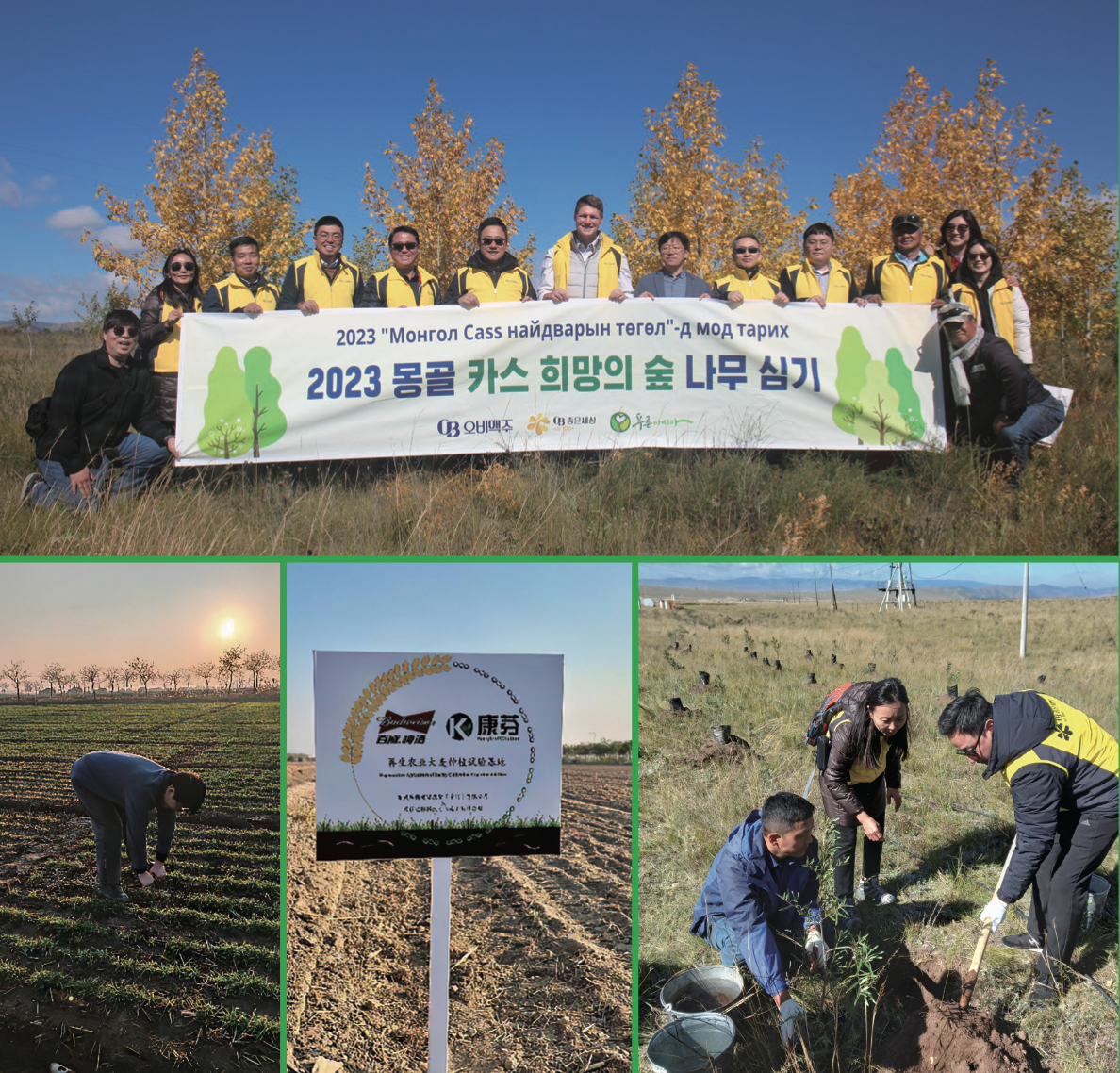
Our ambition to achieve net zero across our value chain in 2040 encompasses a range of strategies aimed at safeguarding biodiversity, mitigating greenhouse gas emissions, and promoting restoration efforts. Drawing from the insights gained through our regenerative agriculture program, sustainable sourcing practices, and water stewardship initiatives, we are actively integrating biodiversity considerations into our operations. We have a specific focus on identifying, measuring, and monitoring the impacts on biodiversity throughout our value chain. We are actively developing a comprehensive soil health framework to assist our farmers and encourage biodiversity, enhance water quality, and sequester greenhouse gas emissions. By equipping our farmers with the necessary practices and tools to assess and enhance soil quality, we aim to foster a stronger connection with them, enabling us to gather valuable insights and provide personalized recommendations. Action items of our soil management are as follows:
• Conduct comprehensive soil assessments to evaluate nature-related risks and understand the impacts and dependencies on natural resources that are significant to Bud APAC’s operations and supply chain.
• Refrain from sourcing ingredients or operating in areas designated as World Heritage Sites and International Union for Conservation of Nature (IUCN) Category I-IV Protected Areas.
• Promote ecosystem restoration by implementing local regenerative practices, providing education to farmers in our supply chain, and optimizing our operations to minimize adverse effects on the environment and biodiversity.
• Minimize habitat disturbance, degradation, and indirect impacts such as pollution and atmospheric emissions from our operations and supply chain.